
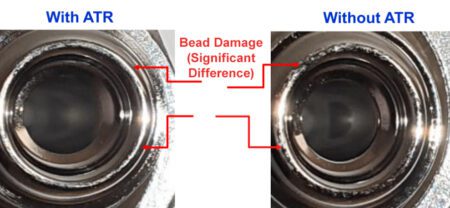
A Small Feature With a Big Job
In a VCR-style face seal connection, most of the attention goes to the gasket or the nut. The sealing bead, though, is what makes the entire joint work. It is a raised, rounded edge at the end of the fitting, and when the nut is tightened, this bead presses into the gasket, creating the metal-to-metal contact that forms the seal.
How the Bead Shapes the Seal
When two fittings come together, the bead focuses the force into a defined contact line. That controlled pressure helps the gasket flow just enough to create a tight seal without being crushed. It also allows the joint to remain stable during pressure changes or temperature swings. Because the bead concentrates the load, it reduces the risk of the gasket shifting or creating tiny gaps that can lead to leaks. In cleanrooms and other sensitive environments, even a small amount of instability can cause real trouble, so the bead becomes a quiet but essential part of the design.
Why It Matters for System Reliability
A well-formed bead reduces the risk of particle release, limits wear during repeated assembly, and improves consistency across the system. Engineers who work with high-purity lines rely on fittings that behave the same way every time, and the bead is one of the reasons these connections are so predictable.

At Hy-Tech Fittings, our Anti-Torque Rings eliminate rotary action transfer, preventing damage to the fitting bead. Contact us today to learn more about our versatile line of problem-solving products.