
The Simple Version
Rotary action during fitting assembly happens when tightening the nut does more than pull two sealing surfaces together. It also drags parts across each other. That extra movement can twist the gland and gasket instead of compressing them cleanly. In high-purity systems, that is a problem because the seal depends on controlled contact, not scraping or shifting.
Where the Rotation Comes From
The main driver is friction between the nut and the back side of the fitting flange. As the nut turns, it can grab the flange surface and transmit that rotation into the gland and gasket. If the gasket starts to rotate while it is being compressed, sealing beads can score the gasket face. You may not notice it at first, but over time, it can show up as leaks, bead wear, or inconsistent results after remakes.
Another common factor is changes in surface condition. Many female nuts rely on plating and coatings to reduce friction. With repeated use, electropolishing, cleaning, or normal wear, the surface protection can thin out or disappear. Once that happens, stainless-on-stainless contact becomes more likely, friction rises rapidly, and the risk of galling increases.

Why It Matters in High Purity Systems
Rotary action does not just shorten gasket life. It can introduce particles, reduce seal repeatability, and turn routine maintenance into troubleshooting. In systems that require frequent assembly and disassembly, like semiconductor gas delivery or test setups, preventing unwanted rotation is one of the easiest ways to protect bead integrity and reduce downtime.
How Hy-Tech Products Help Reduce Rotary Action
Hy-Tech designs several products specifically to limit the friction and twisting that drive rotary action during assembly.
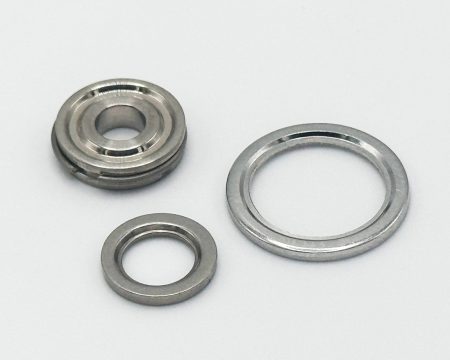
First, Hy-Tech Anti-Torque Rings act as a low-friction barrier between the nut and the fitting surfaces. Instead of the nut dragging the gland and gasket as it turns, the ring helps isolate the rotation to the nut. That keeps the gasket from spinning as it is compressed, thereby protecting the sealing beads, reducing wear, and improving consistency from one assembly to the next. It also helps reduce the risk of galling when surface coatings on nuts wear down over time.
Hy-Tech grooved gaskets support the same goal from another angle. Their design helps control compression, so installers are less likely to keep tightening past the point where a proper seal has already been made. Over-tightening can increase friction and stress at the bead and gasket interface, increasing the likelihood of rotary action problems. By limiting over compression and improving seal support, grooved gaskets help keep assemblies stable, especially in applications that involve repeated remakes.
Used together, these solutions make assembly more predictable. The gasket seats cleanly, the sealing bead stays protected, and technicians spend less time chasing small leaks or replacing damaged parts. In high-purity gas and fluid delivery systems, that stability translates directly into fewer interruptions and better long-term reliability.