
When working with stainless steel fittings, one problem comes up again and again: galling. It’s a type of wear that doesn’t just make assembly difficult, it can compromise an entire system. Understanding why it happens is the first step toward preventing it.
What Causes Galling?
At its core, galling is the result of friction. When two metal surfaces—often stainless steel—rub together under pressure, the protective coatings or finishes can wear off. Without that barrier, the metals begin to “cold weld” to each other. Threads seize, fittings lock up, and damage occurs.
Several conditions make galling more likely:
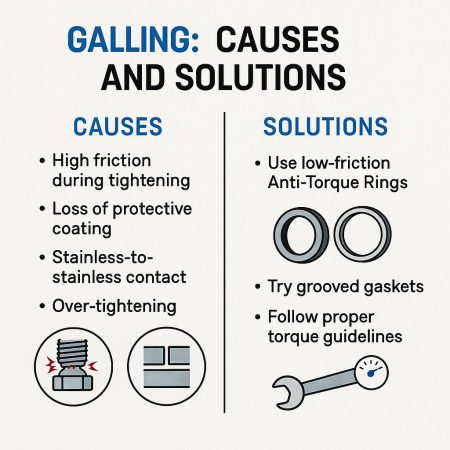
- High friction during tightening – often when nuts and glands rotate against each other.
- Loss of protective coating – such as silver plating wearing away over time.
- Stainless-to-stainless contact – which is especially prone to sticking and tearing under pressure.
- Over-tightening – which increases stress and accelerates surface damage.

Smart Solutions for Prevention
Preventing galling isn’t just about using more lubricant or tightening less. It requires engineering solutions that address the root causes. Hy-Tech’s Anti-Torque Rings create a low-friction barrier that keeps torque from transferring into the gland and gasket. This reduces stainless-to-stainless contact, one of the biggest drivers of galling.
Other strategies include using grooved gaskets to provide better torque feedback during assembly, selecting materials with smoother surface finishes, and following proper torque guidelines to avoid excessive force.
Why It Matters
In high-purity industries like semiconductors, aerospace, and biotech, even small fitting failures can lead to downtime or contamination. By understanding galling and using proven solutions, engineers can build systems that are safer, longer-lasting, and far more reliable.