Skip to Main Content

Latest News

Why Should You Use Unpolished Flat Test Gaskets For Your System?

Hy-Tech’s unpolished flat test gaskets are the perfect solution for your Face Seal-style fitting. Learn more about their features and how they offer a cost-effective alternative without sacrificing on quality. Continue Reading


Caps and Plugs for Face Seal-Style Fittings

Caps and plugs are essential for face seal-style fittings as they help seal inlets and outlets to prevent leaks and ensure safe operation. Though used for the same concept, caps and plugs function a little differently from each other. Caps are made for outlets and are designed to fit tightly over the faces of the fitting to cover the exposed outlet so that dirt, dust, and moisture do not get into the equipment’s system. Plugs are made for inlets and are designed to fit into the interior of the fitting to stop any contaminants from entering the system. Continue Reading


Why Torque Control Matters In Piping

Torque might be the last thing you think of in a piping system. However, controlling it with the right product can affect its performance. Continue Reading


Flat Gaskets

Flat gaskets are flat pieces of material used to create a seal between two surfaces to prevent fluids or gases from leaking. Flat gaskets are used in various applications like pipes, tanks, and pumps to prevent leaks. They are made from various materials, such as rubber, cork, fiber, and metal. Selecting the appropriate material for flat gaskets will ensure reliable performance and durability in different industrial applications. Continue Reading


Stainless Steel vs. Brass Valves: Which One Should You Choose?

Choosing the right material for your equipment’s valves could impact everything from its overall performance to long-term maintenance costs. While brass and stainless steel may have similarities, they each have distinct characteristics that make them unique. This article will compare their main differences and help you decide which material is best for your application. Continue Reading


Flat Gaskets vs. Grooved Gaskets

Grooved Gaskets
The main difference between flat gaskets and grooved gaskets is that flat gaskets are flat sheets of material used for sealing between surfaces while grooved gaskets have grooved surfaces to offer increased seal support and leak resistance, especially in high-temperature applications. Here are some other differences between flat gaskets and grooved gaskets. Continue Reading


Cleanroom Contamination – How Tiny Leaks Cause Big Problems

In semiconductor manufacturing and other types of manufacturing processes that require high-purity gas and fluid delivery systems, cleanrooms must be kept at extremely low levels of airborne particles and contaminants. Even a microscopic leak in a gas or vacuum line can introduce impurities that lead to defects, downtime, and monetary losses. This is why Hy-Tech’s leak-proof components—such as VCR-style fittings, including grooved gaskets and anti-torque rings—are engineered to prevent problems before they occur.

Continue Reading


Preventing Integrated Circuit (IC) Failure

An integrated circuit (IC) is a tiny semiconductor device containing electronic components such as:

  • Transistors
  • Resistors
  • Capacitors

Continue Reading


What Causes Galling and How to Prevent It

What Is Galling?

Galling is a type of adhesive wear that occurs when metal surfaces, like VCR-style fittings, rub together under pressure. Galling typically happens during tightening or sliding contact between the metal surfaces and may result in surface damage, material transfer, or the permanent seizure of threaded components.

Continue Reading


Elevating Fitting Reliability With Anti-Torque Rings

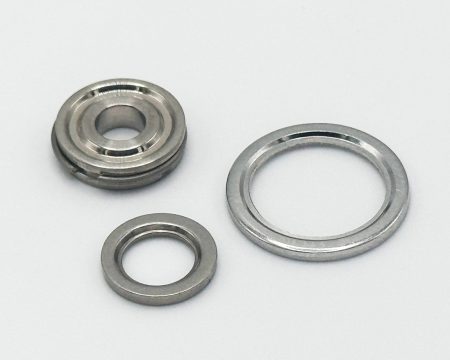
Our Anti-Torque Rings are a small but powerful addition to high-purity gas and fluid delivery systems. By preventing rotational stress, galling, and misalignment during fitting assembly, Anti-Torque Rings benefit various applications.

Continue Reading